
Please Leave Us A Message
Privacy statement: Your privacy is very important to Us. Our company promises not to disclose your personal information to any external company with out your explicit permission.
 Helper Machinery Group Co., Ltd.
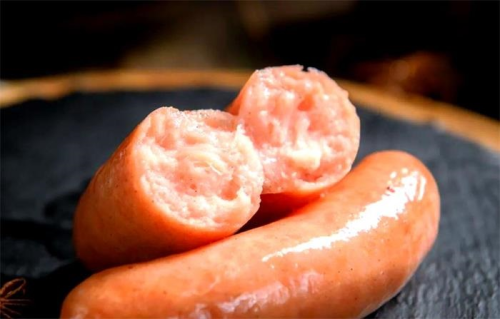
Summary of Knowledge on Casings in Meat Products
Packaging is essential when producing and selling meat products such as hams and sausages. Packaging can be divided into outer packaging and inner packaging. The main purpose of outer packaging is to isolate the product from the external environment, maintain hygiene, and allow consumers to know the product name, ingredients, weight, manufacturer, production date, etc. The main purpose of inner packaging is to prevent the product shape from being damaged during manufacturing and to standardize...
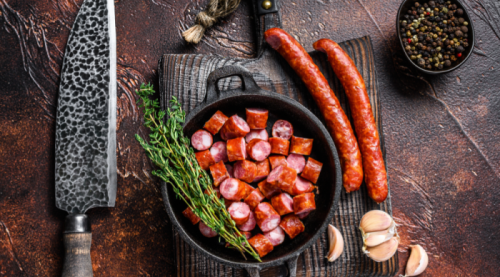
Classification of Cured Meat Sausages
There is a wide variety of sausage products with different processing methods, and there is no uniform classification system worldwide. For example, German sausages are mainly divided into fresh raw sausages, cooked-smoked sausages, and ready-to-eat cooked sausages.For many years in China's meat processing industry, a common classification has been used to distinguish between Chinese-style sausages and western-style sausages: traditional Chinese sausages (represented by Cantonese cured...
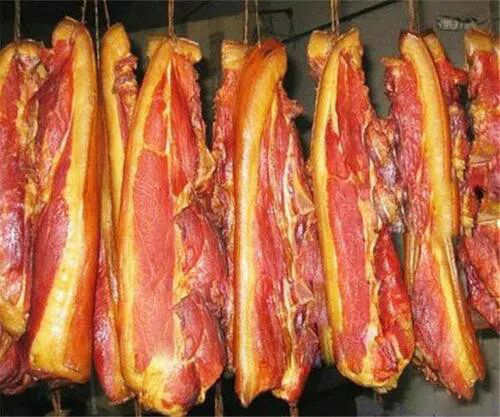
Smoking Technology for Meat Products
The essence of smoking is the process by which products absorb wood decomposition products; therefore, wood decomposition products are the key to determining the effect of smoking. Many components, such as volatile oils, fatty acids, and ethanol, are known as wood extracts. They not only accelerate the achievement of the required smoking state of products but also inhibit microbial growth.Characteristics of SmokingImparts a unique smoky flavor to products. Local high temperatures on the product...
As the wave of clean labels surges, natural preservatives have gradually replaced chemical preservatives as the mainstream choice, thanks to their advantages of safety, non-toxicity, and natural origin. This article focuses on common natural preservatives used in meat products, systematically breaking down their core categories, application highlights, and synergistic combinations, helping you quickly grasp key industry knowledge.1. Core Classification: The Antimicrobial Advantages of Three...
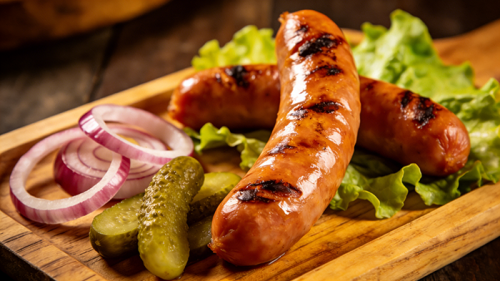
Analysis of Core Skills for Sausage Emulsification
To produce an emulsified sausage with a tender, springy texture, juicy and non-greasy, the key to transforming meat batter into a finished product lies in the precise control of the emulsification process. Whether for hot dogs, frankfurters, or various emulsified cooked sausages, common quality defects such as oil separation, loose structure, and skin–meat separation mostly stem from an unstable emulsification system. This article breaks down the fundamental principles of emulsification in...
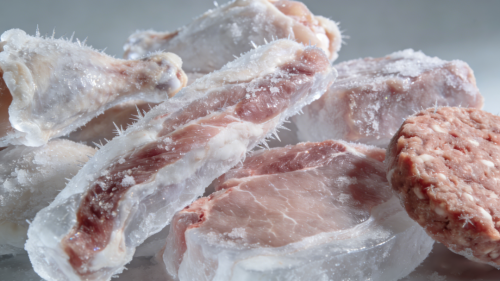
In meat product processing, quick freezing and thawing are two core processes that determine the final taste, water retention, and edibility safety of the product. Each process has its own underlying technical logic, and improper operations can cause targeted quality hazards to meat products with different characteristics. This article will treat quick freezing and thawing as two independent topics, dissecting their core principles respectively, and precisely analyzing the specific hazards of...
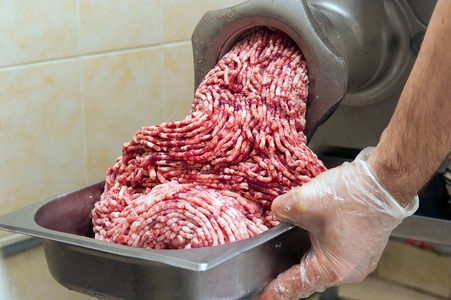
Addressing the differences in rolling and kneading effects
In the meat processing industry, there is a technique that can make ordinary meat pieces tender and flavorful, evenly infused with flavor, and increase the yield. This technique is known as tumbling. Whether it's western-style ham in supermarkets, braised beef in sauce on the dining table, or internet-famous marinated chicken breast, they all rely on the tumbling process. However, most practitioners only know how to use it, but not why it works: why do the effects vary so greatly despite using...
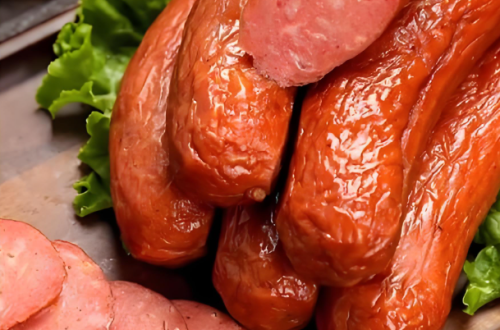
Traditional Harbin Red Sausage, Modernized Production Optimization Plan
Harbin red sausage, also known as "Lidao Si" in Russian, originated from Lithuania in Eastern Europe. After the construction of the Middle East Railway in 1898, a large number of foreigners entered Harbin and brought meat products with them. The sausage from Lithuania is of a dark red color, thus it is also called red sausage. As it is produced in Harbin, more people call it Harbin red sausage.After over 100 years of development, Harbin red sausage has become a symbol of Harbin's specialties....

Detailed Explanation of Key Points for Raw-Cooked Area Layout in Food Workshops
In the food production process, the raw-cooked junction area is a critical line of defense for food safety. Rational layout planning not only achieves the separation of raw and cooked materials but also serves as an important foundation for ensuring food safety. Based on standards such as GB 14881, this paper systematically elaborates on the planning and hygiene control key points of this area.The raw-cooked junction area is a transition zone between the processing areas of raw materials...
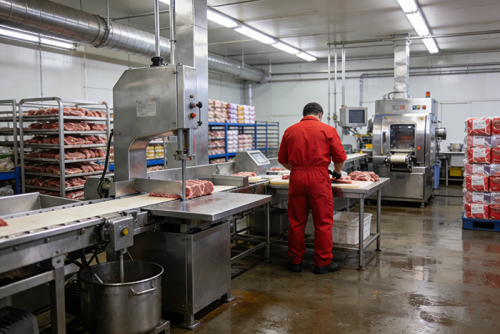
Operating Procedures for 10 Types of Equipment in Meat Product Production Workshop
I. Operating Procedures for Cooking Pot 1.This equipment shall be operated by designated personnel only; no other personnel are allowed to operate it without permission.2.Check whether the cooking pot is in normal condition and whether the steam supply is sufficient before daily operation.3.Inspect the water tank for cleanliness and foreign debris before daily use, and check for water leakage after filling with water.4.During boiling, ensure that the water level fully covers the meat surface,...
1. IntroductionAt present, the rapid development of the cooked meat product market has also brought many challenges, especially in terms of product quality control. Due to the differences in the scale and technical level of production enterprises, cooked meat products may encounter problems such as unqualified sensory and physical-chemical indicators, microbial contamination, and excessive food additives during processing, storage, and sales. These problems not only affect the quality and taste...
Detailed Explanation of Meat Product Curing Techniques
Most meat products have to go through the curing process during processing to promote the maturation of meat products, enhance their flavor, and stabilize their sensory state. Due to different curing methods and times, as well as the influence of production processes and packaging, various products with unique flavors have been formed during the processing of meat products. From a technological perspective, the quality of curing can affect the next process and determine the final product...
Analysis of Common Quality Problems in the Production of Sausage Products
I. Quality problems in appearance(1) Rupture of the intestine1. Problems with the casingIf the casing itself is in varying degrees of spoilage and deterioration, the intestinal wall will be uneven in thickness, loose, fragile, and have poor resistance to damage. Casing with salt erosion will contract and lose elasticity. Using such casing for stuffing will inevitably cause rupture.2. Problems with the meat fillingIf the meat filling has a high water content, it will expand rapidly during...
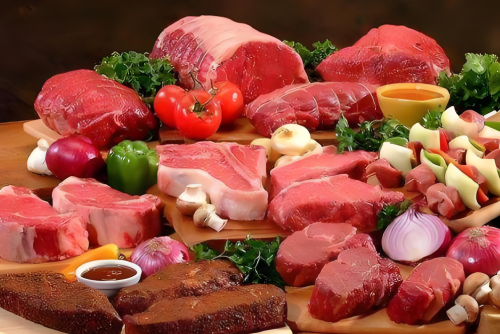
Quantitative brining process for meat products in sauce and brine
Braised meat products boast a long history in China, commanding a vast market due to their distinctive flavors and diverse varieties. As early as the Spring and Autumn Period, China possessed highly developed meat processing and cutting techniques, which later evolved into methods like grilling and braising.After cooking and processing, meat proteins become flavorful and easier to digest, leading to the emergence of primitive processed meat products like beef jerky, dried meat slices, and...
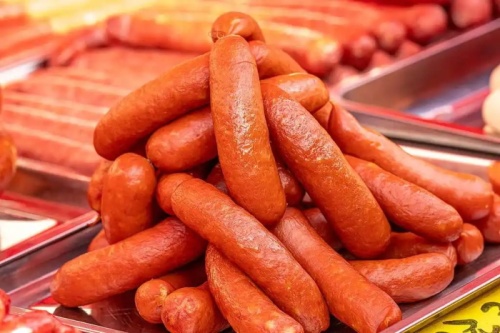
Standardized production process and detailed formula for red sausage
I. Western-style Red Sausage1. Raw Material FormulaThere are many formulas for Western-style red sausage meat filling, and two common ones are as follows:① 90 kilograms of lean meat, 10 kilograms of lard, 20 kilograms of starch, with seasonings of 3.3 kilograms of salt, 10 grams of sodium nitrite, 300 grams of monosodium glutamate, and 250 grams of five-spice powder; the length of the casing used is about 300 meters of small pig intestines.② 30 kilograms of lean meat, 20 kilograms of fat, 50...
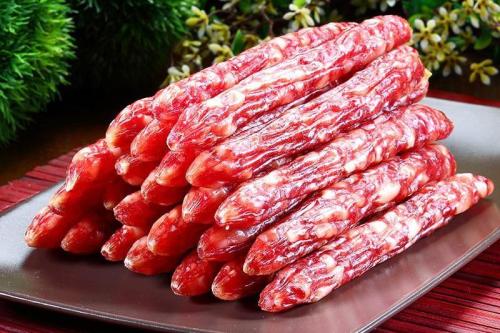
Sharing the Production Process and Recipe of Sausage
I. Material Preparation1. PorkIt is best to choose pork with a good balance of fat and lean meat, such as pork belly with a ratio of 30% fat to 70% lean meat or 20% fat to 80% lean meat. Generally, it is recommended to use fresh pork with firm texture for better taste. For making 5 kilograms of sausage, about 5 kilograms of pork is needed.2. CasingsNatural casings (such as pig or sheep small intestines) or artificial casings can be used. Natural casings offer better taste and elasticity but are...
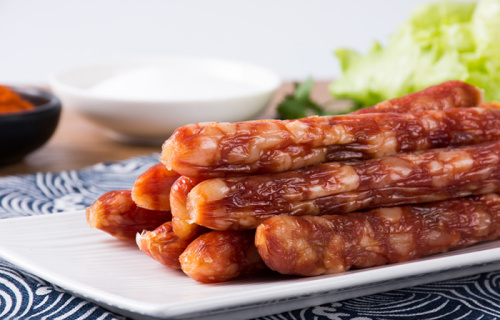
Analysis of the Reasons for Sausage Oiling and Solutions
I. Reasons for Oil Leakage1. Low proportion of lean meat: After meat is minced and tenderized, a large amount of salt-soluble protein will be released under the action of salt and phosphate. Salt-soluble protein has a strong ability to wrap fat. If the proportion of meat in the product is relatively low, the ability to wrap fat will decrease, eventually leading to oil leakage in the product.2. Excessive fat content: Many manufacturers increase the fat content to reduce costs. Despite the full...

Basic principles of emulsification and analysis of influencing factors
Emulsified sausages are popular among people due to their good taste, delicious flavor and rich varieties. The processing technology of emulsified sausages is not complicated, but problems such as oil leakage and loose structure often occur during processing due to poor control of production conditions, improper operation, especially poor emulsification of meat paste or poor stability of emulsified meat paste.1. Basic PrinciplesEmulsified meat paste is composed of a matrix of muscle and...

HELPER Group & GULFOODMANUFACTURING
HELPER Group – Professional Food Machinery ManufacturerHELPER Group is one of China’s leading food machinery manufacturers, specializing in meat and pasta processing equipment.Founded in 1986, HELPER has been a pioneer in developing and manufacturing machines and equipment for the meat and pasta industries. Our solutions cover a wide range of applications, including sausage production, meat processing, pet food production, as well as noodles and dumplings.With our extensive experience in the...
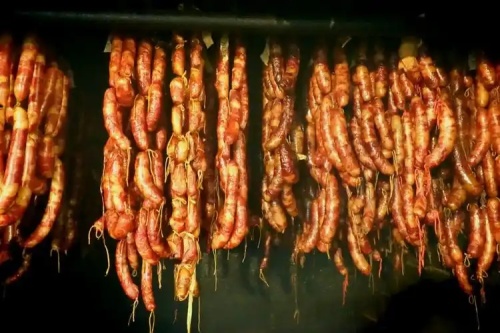
Detailed Explanation of Smoking Techniques
1. The functions of smokingA. It endows the product with a unique smoked flavor. The components of smoke, including phenols, alcohols, organic acids, carbonyl compounds, and the flavor substances formed by their reactions with the components of the meat, jointly constitute the smoked flavor.B. It forms a unique color (tea brown): This color is the result of browning reactions or Maillard reactions between amino compounds on the product's surface and carboxyl compounds in the smoke components.C....
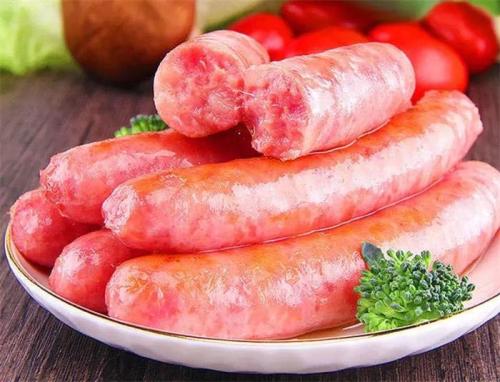
What should one pay attention to when making sausages?
Sausages are made by stuffing seasoned meat into small intestines of pigs or sheep (sometimes large intestines are used) and then drying them. Generally, sausages refer to pork sausages, which are produced all over the country. Famous ones include Ruyao sausage from Jiangsu, Yuntai sausage, Cantonese sausage, Guangwei sausage from Yibin, Sichuan, Zhaoyuan sausage from Shandong, Wuhan sausage, Liaoning sausage, Guizhou small sausage, Nan Chang from Jinan, Weifang sausage, Fenggansheng sausage...
The Application of Soy Protein in Processed Meat Products
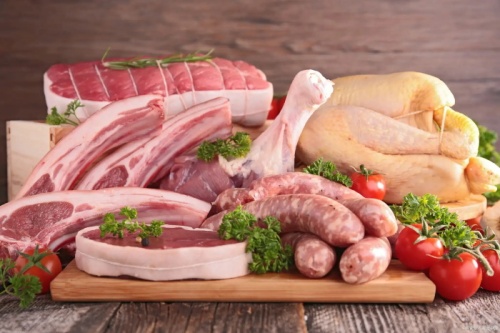
In the development of processed meat products, soy protein is a commonly used additive. It not only supplements essential amino acids required by the human body but also has excellent functional properties such as foaming, emulsifying, and gelling abilities. Therefore, it can significantly improve the texture of food, increase its elasticity, oil-holding capacity, and water-holding capacity, enhance the storage performance of food, and reduce production costs. It plays an important role in the...
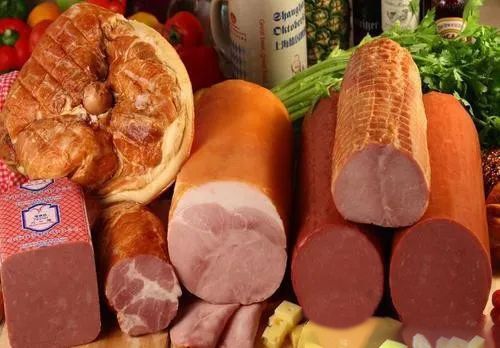
Key points of operation in the production and processing technology of low-temperature meat products
1. Classification of meat products1) By raw materials: products made from livestock meat, poultry meat, fish, and game.2) By processing techniques: cured products, braised products, smoked and grilled products, dried products, fried products, sausage products, ham products, and canned meat products.3) By origin: Chinese-style meat products and Western-style meat products.4) By processing degree: unheated meat products and heated meat products.2. Significance of meat product processing1) To kill...
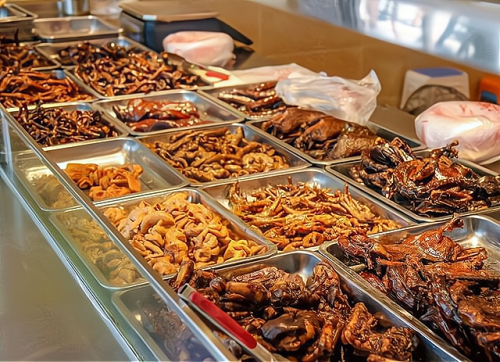
Key Technical Aspects of Braised Food Preparation
1. The ingredients should be fresh. Try not to buy semi-finished products from the market, especially those that have been blanched. For instance, internal organs like pig intestines and pig stomachs. If they are not cleaned thoroughly before blanching, the unpleasant smell will be impossible to remove after blanching. Nowadays, many people prefer to buy semi-finished products for convenience. However, they don't know that many wholesalers process too many semi-finished products every day and...


Privacy statement: Your privacy is very important to Us. Our company promises not to disclose your personal information to any external company with out your explicit permission.
Fill in more information so that we can get in touch with you faster
Privacy statement: Your privacy is very important to Us. Our company promises not to disclose your personal information to any external company with out your explicit permission.